Beyond the Poster
Psychedelic art, taken seriously.
The contemporary psychedelic art tradition is older, deeper, and more disciplined than the genre's pop reputation suggests. Here is the working note.
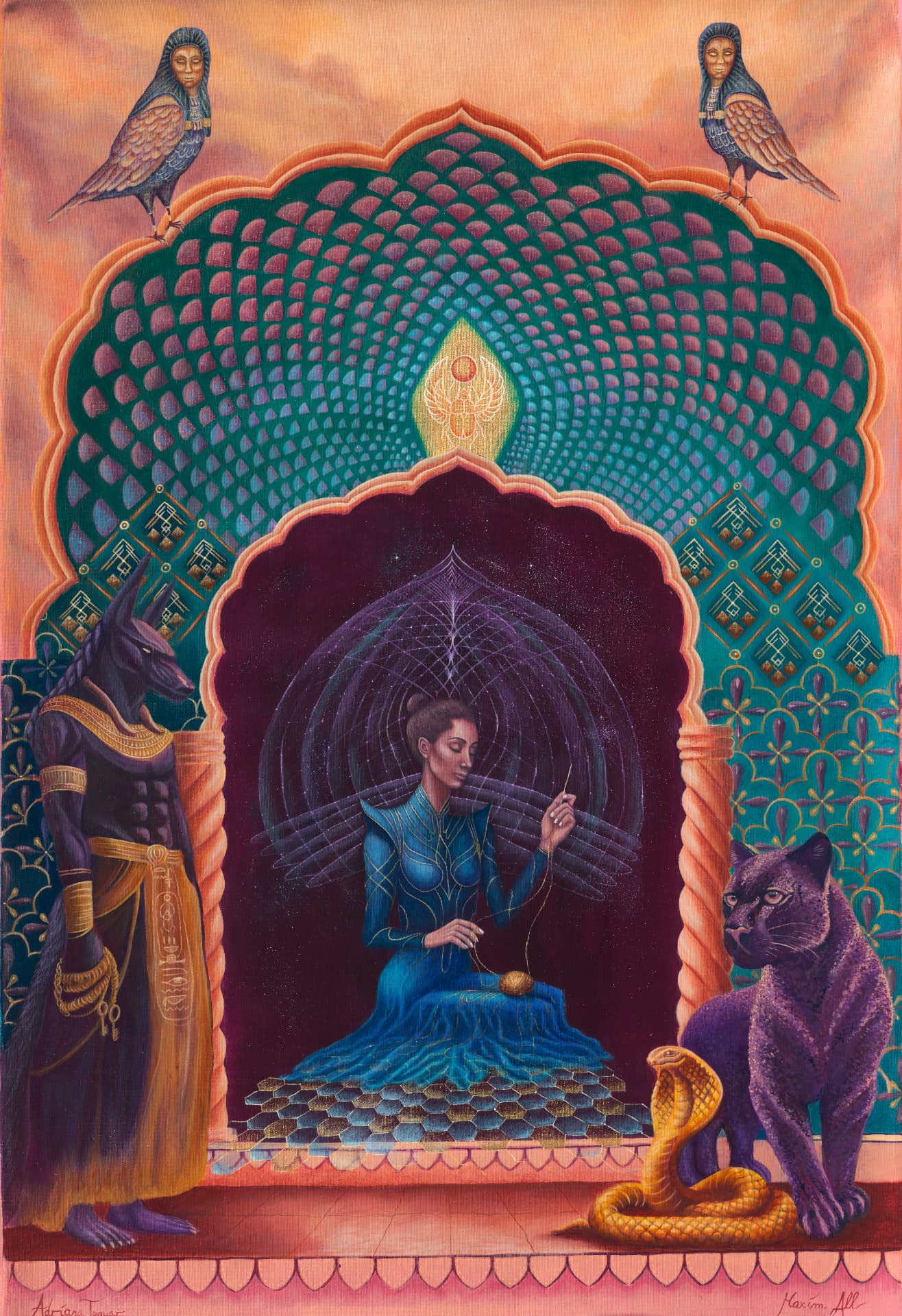
Psychedelic art, as the term is usually used, points to a 1960s aesthetic of saturated color, melting form, and concert posters. That moment was real, but it was the surface of something much older. Visionary painting drawn from non-ordinary states of consciousness exists in every culture that has ever taken those states seriously — from Huichol yarn paintings to Tibetan thangkas to Australian Aboriginal dreaming maps.
A discipline, not a style
What the contemporary psychedelic art lineage shares — across artists like Alex Grey, Android Jones, Amanda Sage, Mars-1, Carey Thompson — is not a palette but a discipline. The painter sits with the vision until it is digested. The work in the studio is the slow translation of an experience that, in the moment, refused language. Without that translation, a vision is only a memory. With it, the vision becomes a doorway that others can walk through.
Integration as art
In the language of the plant medicine traditions, this discipline is called integration. The medicine opens a door. The integration — the journaling, the conversation, the long quiet — is what carries the gift back into ordinary life. For a visionary painter, the canvas is one of the most rigorous forms integration can take. A painting will not let you lie about what you saw.
If this work calls you
The studio holds retreats where painting, ceremony, embodiment and integration are practiced together. Original paintings live in the gallery; hand-numbered editions make the work accessible to a wider circle of collectors. See also the field guide to visionary art.
Portal works